

Last Updated: November 24, 2026
Quick Summary
The edible flower varieties that work best in professional kitchens hold their color, shape and flavor through plating, service and storage. Freshly Preserved's freeze-dried marigold, lavender, borage, squash blossom and pansy each suit a different role on the plate. Start by deciding whether the flower should carry flavor, carry color, or simply look finished.
- Marigold holds its shape well and suits salads, cocktails, cakes and savory dishes.
- Lavender is the strongest flavor and should be used sparingly to avoid a soapy taste.
- Freeze-dried blooms keep their color and do not need refrigeration.
- Freeze-dried edible flowers have a shelf life of over 1 year.
- Test each pairing on a small batch before committing to a menu.
Table of Contents
- Which Edible Flower Varieties Work Best for Professional Kitchens?
- Chef-Focused Variety Comparison Matrix
- Culinary Edible Flowers and Their Flavor Profiles
- Edible Flower Flavor Guide: Sweet, Peppery, Herbal and Mild
- Pairing Edible Flowers With Savory Dishes and Cocktails
- Using Edible Flowers for Cakes, Pastry and Desserts
- Garnishing and Plating Techniques With Edible Blooms
- Visual Appeal: Color, Shape and Bloom Size
- Food-Grade Edible Flowers: Sourcing and Verification
- Shelf Life, Post-Harvest Handling and Storage
- How to Store Edible Flowers in a Professional Kitchen
- Seasonality, Availability and Dependable Substitutions
- Purchasing Guidance for Professional Kitchens
- Building Your Edible Flower Program Next Steps
- Frequently Asked Questions
Which Edible Flower Varieties Work Best for Professional Kitchens?
The edible flower varieties that work best in professional kitchens are the ones that hold their color, shape and flavor through plating, service and storage. Freshly Preserved stocks freeze-dried edible marigolds, lavender, borage, squash blossom and pansies, and each one earns its place for a different reason. Freeze-drying preserves color as brightly as possible, so a chef can plan a garnish ahead rather than racing fresh blooms to the pass.
Marigolds are the workhorse of the range. Their bright yellow, orange and red petals read clearly on both savory and sweet plates. Lavender suits pastry and beverages, where its floral sweetness has room to work. Pansies add a soft, mild note and show well on cakes and cookies. Borage brings a fresh, cucumber-like flavor that pairs with herbs and cold drinks. Squash blossom is the most structural of the five, large enough to be filled or battered.
When you choose, start with the dish, not the flower. Decide whether the flower needs to carry flavor, carry color, or simply sit on top looking finished. That single decision narrows most menus down to two or three varieties.
Chef-Focused Variety Comparison Matrix
The table below compares the five varieties on the factors that matter most during service: flavor, texture, color, season, durability, best applications, and handling notes. Use it as a shortlist, then taste and test in your own kitchen before committing to a menu.
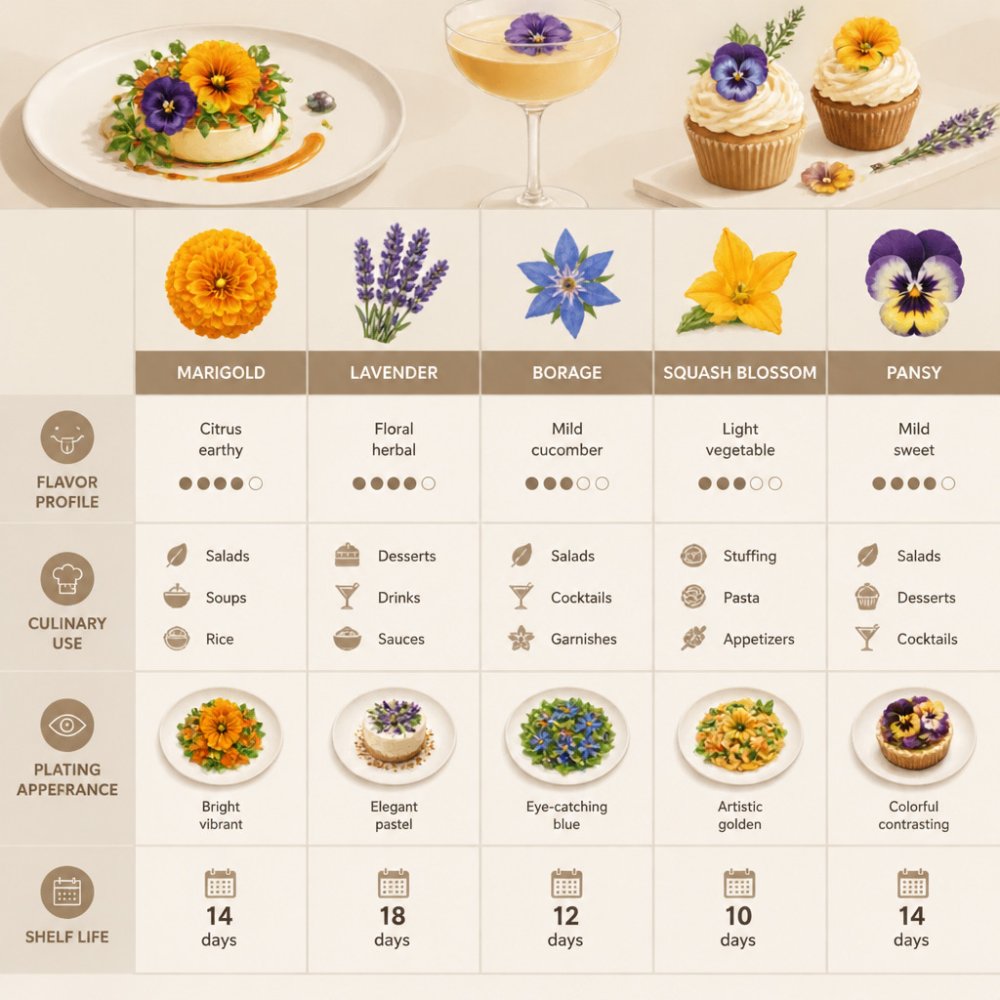
| Variety | Flavor Profile | Texture | Color | Peak Season | Durability on Plate | Best Applications | Handling Notes |
|---|---|---|---|---|---|---|---|
| Marigold | Mild, slightly peppery | Sturdy, crisp petals | Vivid yellow, orange, red | Summer to early fall | High, holds shape when scattered | Salads, cocktails, cakes, savory dishes | Easy to scatter; resistant to wilting |
| Lavender | Sweet, floral, hints of mint | Soft, slightly dry | Purple | Late spring to summer | Moderate, stems add height | Desserts, teas, cocktails, cake decoration | Use sparingly; keep dry to avoid clumping |
| Borage | Fresh, cucumber-like | Delicate, thin | Blue | Spring to early summer | Low, wilts quickly | Cold drinks, herb blends, desserts | Place last; handle minimally |
| Squash Blossom | Mild, vegetal | Firm, fleshy | Bright yellow-orange | Summer | High, holds structure when filled | Stuffed appetizers, fried, grilled | Best used same day; fragile once cut |
| Pansy | Mild, slightly sweet | Soft, velvety | Multicolored faces (purple, yellow, white) | Cool weather, spring and fall | Moderate, pairs well with buttercream | Cakes, cupcakes, cookies, wedding cakes | Avoid moisture; place close to service |
How to read the matrix: Start with the dish, not the flower. Decide whether the flower needs to carry flavor, carry color, or simply sit on top looking finished. That single decision narrows most menus down to two or three varieties. For example, if you need a sturdy petal that survives a tossed salad, marigold is the clear choice; if you need height on a cake, lavender stems work; if you need a dramatic centerpiece, squash blossom delivers.
Substitution: When one variety is unavailable, substitute by role: a marigold can stand in for a pansy when color is the goal, and borage can replace a fresh herb when a cool, herbal note is needed. Choose a substitute that matches the original's flavor family and bloom size, then test before service.
Operational notes: For high-volume service, consider pack formats and yield, and calculate cost per garnish rather than cost per pack. Keep a par level for each variety so you never run out during a busy weekend.
Culinary Edible Flowers and Their Flavor Profiles
Edible flowers vary far more in flavor than most diners expect. Some act as seasoning, while others are purely visual. Knowing which is which keeps a dish balanced.
Marigold petals taste mild and slightly peppery, so they add interest without overwhelming a salad or savory course. Lavender is the strongest flavor in the group and should be used with restraint, since too much turns soapy. Borage tastes distinctly fresh and cucumber-like, which makes it a natural partner for chilled drinks. Squash blossom is subtle and vegetal, a good carrier for fillings. Pansies are gentle and faintly sweet, suited to cake decoration where flavor must stay quiet.
A good starting rule: use flavor-forward flowers like lavender and borage in small amounts, and reserve the milder flowers for garnish where appearance matters most.
Edible Flower Flavor Guide: Sweet, Peppery, Herbal and Mild
Chefs often sort edible flowers by how they taste, which makes menu planning faster. Think of the flavor as one of four families.
Sweet flowers, such as lavender and pansy, suit desserts, pastry and sweet cocktails. Peppery flowers, led by marigold, lift salads and cold appetizers. Herbal flowers, especially borage, pair with herb blends, meat rubs and drinks with a fresh edge. Mild flowers, including squash blossom, let the dish's main ingredients lead.
Matching the family to the course keeps flavor intentional. A lavender note in a lemon dessert works. The same note in a heavily spiced savory sauce usually does not.
Pairing Edible Flowers With Savory Dishes and Cocktails
Pairing works best when the flower echoes an ingredient already on the plate. Use the flavor families below as a framework, then test each pairing on a small batch first, because a flower that tastes pleasant alone can clash with a strong spirit or bitter mixer.
Peppery flowers (marigold): Marigold's mild pepper note complements grilled vegetables, light seafood, and cold appetizers. Try it with grilled shrimp, arugula salads, or a citrus vinaigrette. In cocktails, marigold pairs well with tequila and mezcal, where its slight bitterness balances smoke.
Herbal flowers (borage): Borage's cucumber character suits chilled salads, gin cocktails, and cold soups. Pair it with cucumber, mint, or dill in a salad; float a bloom in a gin and tonic or a Pimm's cup. For savory dishes, borage works with yogurt sauces and cold poached fish.
Sweet flowers (lavender, pansy): Lavender is the strongest flavor in the group and should be used with restraint, since too much turns soapy. Pair it with lamb, duck, or a honey-glazed carrot dish where its floral sweetness has room to work. Pansy is gentle and faintly sweet, suited to cake decoration where flavor must stay quiet, but it can also garnish a fruit salad or a light vinaigrette.
Mild flowers (squash blossom): Squash blossom is subtle and vegetal, a good carrier for fillings. Stuff it with ricotta and herbs, batter and fry it as an appetizer, or grill it alongside summer vegetables. In cocktails, squash blossom adds visual drama but little flavor, so use it as a garnish rather than an ingredient.
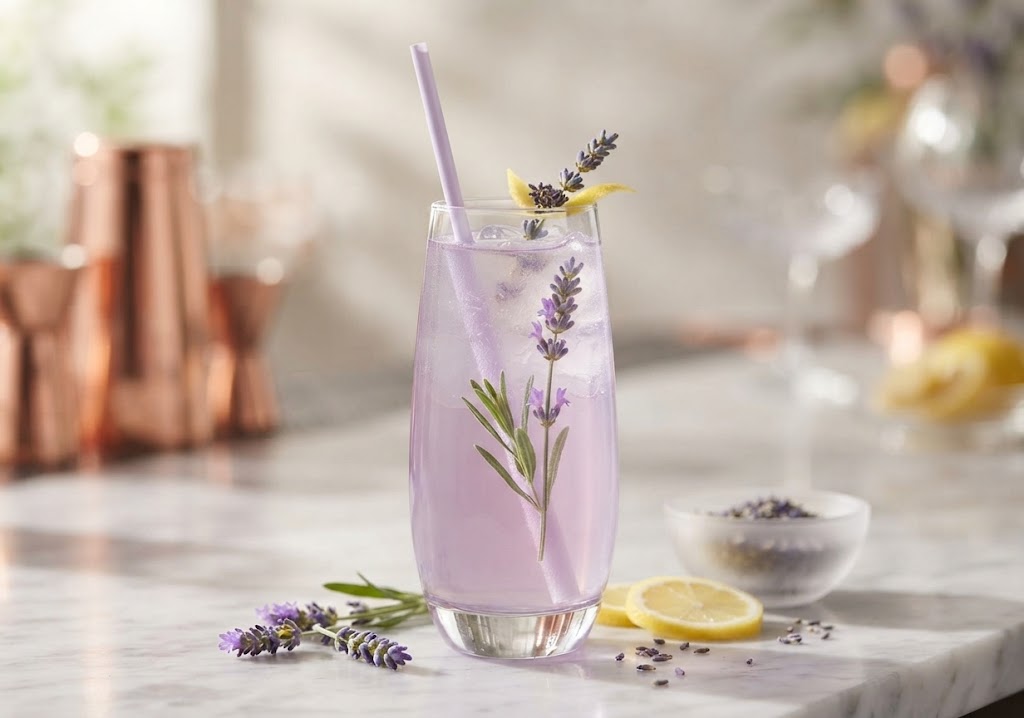
Cocktail applications: In cocktails, lavender and borage add aroma and color rather than sweetness alone. Add flowers at the last moment so the aroma stays bright. For a lavender cocktail, muddle a small amount of petals with lemon and gin; for borage, float a bloom on a gin fizz or a cucumber cooler. Avoid crowding the glass surface with multiple petals.
Watch out: Dampen a dried petal and it can bleed color onto light frosting or a pale sauce, so place wet components first and flowers last. Test each pairing on a small batch first, because a flower that tastes pleasant alone can clash with a strong spirit or bitter mixer.
Using Edible Flowers for Cakes, Pastry and Desserts
Pastry is where edible flowers do some of their most visible work. Pansies and marigolds suit cakes, cupcakes and cookies, where their color reads clearly against buttercream and fondant. Lavender's long stems can be set into a cake to add height and dimension, creating a layered, three-dimensional look without extra sculpting.
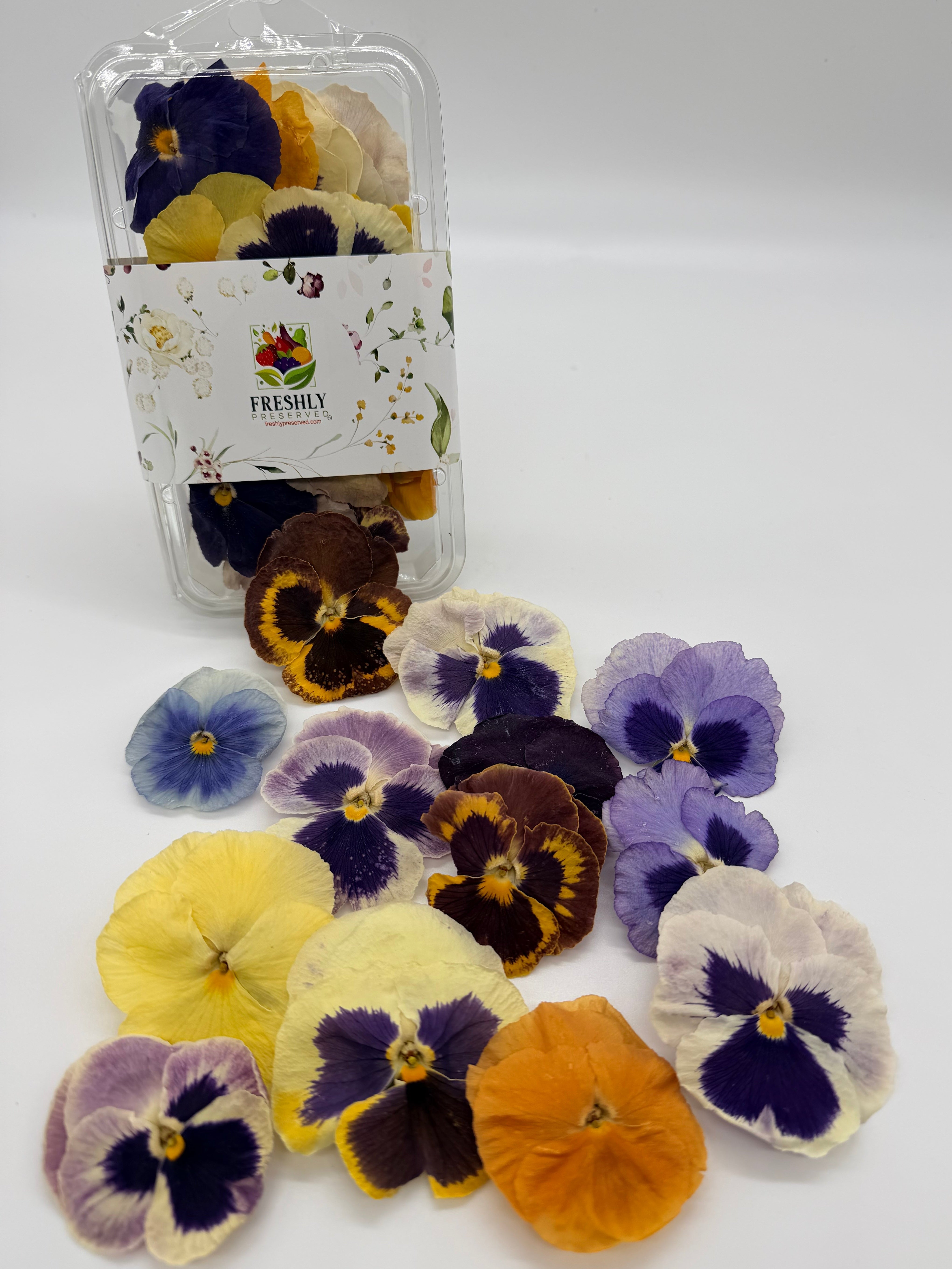
For wedding and celebration cakes, place flowers close to the serving time and keep them away from heavy moisture. A light dusting of petals over a fresh frosting looks more finished than a dense cluster. Freshly Preserved's Freeze-Dried Edible Pansies are suited to cake decoration, and the Freeze-Dried Edible Lavender has long stems that can be used for height on cake designs.
Garnishing and Plating Techniques With Edible Blooms
Good garnish placement is about balance. Place one or two focal blooms where the eye lands first, then add smaller petals to connect the plate. Odd numbers usually look more natural than even ones.
For plated desserts, set flowers last, just before the plate leaves the pass. For cocktails, float or rim the glass with a single petal rather than crowding the surface. Freeze-Dried Edible Marigolds add vivid yellow, orange and red color to salads, cocktails, cakes and dishes.
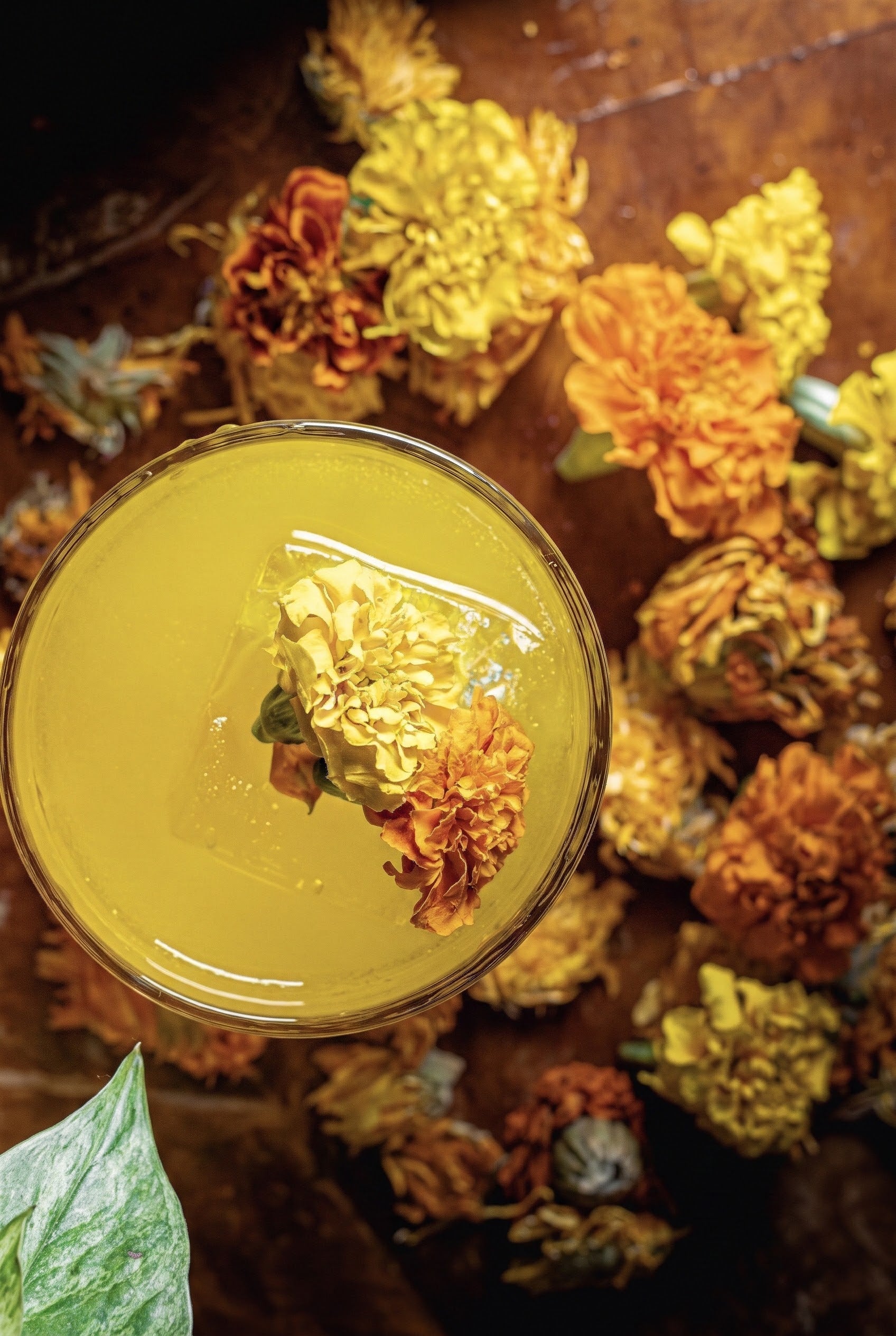
Watch out: dampen a dried petal and it can bleed color onto light frosting or a pale sauce, so place wet components first and flowers last.
Visual Appeal: Color, Shape and Bloom Size
Color is the main reason chefs reach for edible flowers. Marigold delivers saturated yellow, orange and red. Borage's star-shaped blue is rare on a plate and stands out immediately. Pansies offer a mix of purple, yellow and white faces. Squash blossom provides the largest shape, which makes it a dramatic centerpiece.
Bloom size should match the plate. Small petals suit delicate desserts and cocktails. Larger blossoms suit appetizers and platters where the flower is the feature.
Food-Grade Edible Flowers: Sourcing and Verification
Food-grade sourcing is the first requirement for any edible flower in a commercial kitchen. Buy only flowers sold specifically for consumption, and ask the supplier how the product was grown, harvested, dried and packed. Confirm that the packaging states food-grade intent and carries a clear lot or batch identifier, so you can trace a product if a question arises.
Freshly Preserved offers a selection of food-grade, freeze-dried edible flowers, made in the USA and free of preservatives and added sugar. Check current documentation from any supplier before service.
Ask every supplier for written information on growing practices and any testing they carry out. Keep those records with your purchase invoices.
Shelf Life, Post-Harvest Handling and Storage
Freeze-drying is what makes professional use practical. Freeze-dried blooms keep their color far longer than fresh flowers. Freshly Preserved's freeze-dried edible flowers have a shelf life of over 1 year, and they do not require refrigeration.
To preserve quality, keep unopened packs in a cool, dry place, away from direct sunlight and strong heat. Once opened, reseal the bag tightly and remove as much air as possible. Moisture is the main enemy of dried petals, so avoid opening packs in humid conditions and never store them above a steaming or cooking area.
Stock rotation still matters. Label each opened container with the date and use older stock first, even when it is within shelf life.
How to Store Edible Flowers in a Professional Kitchen
Set up a dedicated dry storage spot for edible flowers, separate from raw proteins and strong-smelling ingredients, since lavender and borage can take on other aromas. Use airtight containers with clear labels showing the variety and open date. Keep a small working jar at the pass and refill it from sealed stock, so the main supply stays closed.
Check containers during routine stock counts. Discard any product that smells musty, shows moisture or has faded beyond use.
Seasonality, Availability and Dependable Substitutions
Fresh edible flowers follow the growing season, which makes them unreliable for year-round menus. Freeze-dried varieties remove that constraint, so a chef can build a seasonal-looking menu in any month.
When one variety is unavailable, substitute by role. A marigold can stand in for a pansy when color is the goal, and borage can replace a fresh herb when a cool, herbal note is needed. Choose a substitute that matches the original's flavor family and bloom size, then test before service.
Purchasing Guidance for Professional Kitchens
Buying for a professional kitchen differs from buying for home use. Calculate how much you use per week, not per event, and order to that run rate. Freshly Preserved offers wholesale and bulk orders, and details are on the bulk orders page.
Compare cost per gram, not cost per package, since bulk pricing changes the math. Keep a par level for each variety so you never run out during a busy weekend.
For smaller operations, start with one or two varieties and expand once you know your usage.
Building Your Edible Flower Program Next Steps
Start small and build deliberately. Choose two or three varieties that match your signature dishes, test them in your own recipes, and record how each one performs in plating and storage. Expand the range only when a flower earns a regular spot on the menu.
Freshly Preserved carries freeze-dried edible flowers, including the varieties covered in this guide. Browse the full Edible Flowers collection and pick the varieties that suit your menu.
Frequently Asked Questions
What are some culinary edible flowers?
Chefs commonly work with nasturtium, calendula, marigolds, pansies, borage, lavender and squash blossoms. Each one brings a different flavor, from peppery nasturtium to cucumber-like borage, so choose by the dish rather than by color alone. Freshly Preserved offers freeze-dried marigolds, lavender, borage, squash blossom and pansies, which keeps color and shape stable for plating over a long shelf life.
Which edible flowers work best for cakes and desserts?
Pansies and marigolds hold their color well on cakes, and their flat faces suit buttercream and fondant work. Lavender adds sweetness with hints of mint and rosemary and can be used in cake designs for height and dimension because of its long stems. Borage gives a cucumber-like note that works in lighter desserts. Always confirm that a flower is food-grade before it touches a dessert, and place blooms on the cake just before service so they stay bright.
How can chefs verify that flowers are safe to eat?
Buy only flowers sold explicitly as food-grade edible flowers, and confirm the supplier grows or processes them without pesticides meant for ornamental use. Ask for documentation on sourcing and handling, and keep flowers separate from non-edible garden material. Freshly Preserved sells food-grade freeze-dried edible flowers with no preservatives or added sugar.
How should professional kitchens store edible flowers?
Place edible flowers in a cool, dry place. Freshly Preserved products have a shelf life of over 1 year and do not require refrigeration. Reseal containers after each use, and rotate stock so older packages are used first. Good storage protects color and texture, which matters most for plated garnishes.
Where can chefs buy food-grade edible flowers?
Chefs can buy food-grade edible flowers from specialty suppliers that label their products for culinary use. Freshly Preserved offers wholesale and bulk orders, with individual products such as freeze-dried edible pansies at $39.99 and freeze-dried edible borage at $22.99. Check each listing for food-grade labeling before ordering, and compare bulk pricing against your monthly volume.
What are the top edible flowers for professional chefs?
The most useful varieties for professional kitchens are marigolds for color, lavender for floral sweetness, borage for cucumber-like freshness, squash blossoms for savory stuffing and frying, and pansies for cake decoration. Choose based on the flavor you need and how the flower will be presented. Freshly Preserved stocks each of these in freeze-dried form, which gives chefs consistent color and shape across a full season.
Which types of flowers are typically not used by professional bakers?
Professional bakers generally avoid flowers that are not sold as food-grade, including blooms grown with ornamental pesticides or harvested from roadsides and gardens without tracking. Flowers that wilt quickly or bruise easily are also less practical for cakes, because they lose their shape before service. Freeze-dried varieties from a food-grade supplier give bakers a stable alternative for decorations that must hold their shape.


