

Table of Contents
- Step 1: Choose the Best Edible Flowers for Cakes
- Step 2: How to Preserve Edible Flowers for Baking
- Step 3: Food Safety Standards for Edible Flowers
- Step 4: How to Attach Flowers to Buttercream Cakes
- Step 5: Pairing Flavor Profiles with Cake and Frosting
- Step 6: Design Aesthetics and Floral Placement
- Frequently Asked Questions
Last Updated: September 14, 2026
Step 1: Choose the Best Edible Flowers for Cakes
The best edible flowers for cakes balance three things: they must be genuinely food-grade, sturdy enough to survive handling, and visually striking against frosting. According to the FDA's guidance on edible flowers and produce safety, not every flower sold for decoration is safe to eat, which is why sourcing matters more than variety count. This guide from Freshly Preserved walks through the full process, from selection to final placement.
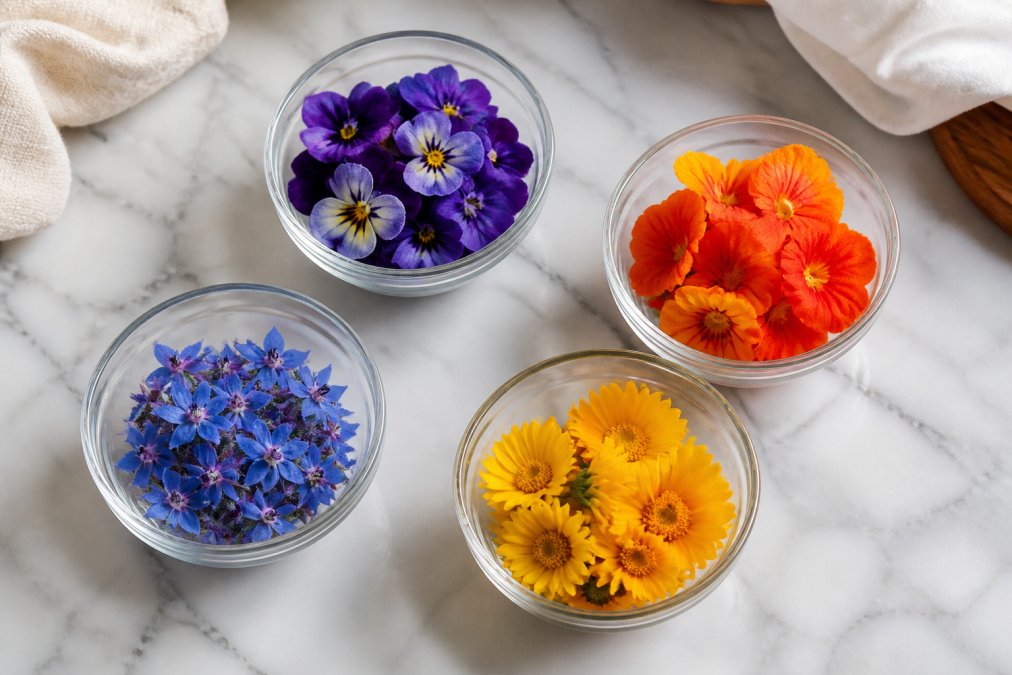
Edible flowers are blossoms grown and handled specifically for human consumption, meaning they are pesticide-free, correctly identified, and stored away from ornamental stock. For cakes, the workhorses are pansies, violas, nasturtium, calendula, borage, and rose petals, all of which hold their shape and carry mild, food-friendly flavors.
Top Varieties for Flavor and Visual Impact
Pansies and violas offer the widest color range and a barely-there grassy note that pairs well with vanilla or citrus buttercream. Nasturtium brings a peppery bite that cuts through sweet frosting. Calendula adds a subtle saffron-like warmth, borage tastes faintly of cucumber, and rose petals lend a floral perfume that suits chocolate and berry cakes.
Flowers to Avoid: Toxic Varieties and Lookalikes
A common mistake is assuming any pretty bloom is fair game. Several popular garden flowers are toxic, and some edible species have dangerous lookalikes.
Avoid |
Why It's Risky |
Safe Alternative |
|---|---|---|
Lily of the valley |
Cardiotoxic if ingested |
Lily-flowered pansy |
Foxglove |
Contains cardiac glycosides |
Borage |
Oleander |
Highly toxic, all parts |
Calendula |
Hydrangea |
Cyanogenic compounds |
Violas |
Step 2: How to Preserve Edible Flowers for Baking
Preservation determines how long your garnish survives on a finished cake. Fresh flowers wilt within hours of touching frosting, while freeze-dried and crystallized petals hold their structure for days. Choose a method that matches your timeline.
Fresh vs. Freeze-Dried: Which Lasts Longer on a Cake?
Freeze-dried flowers last dramatically longer. A fresh pansy placed on buttercream may soften and droop within a few hours, especially in a warm room (pubmed.ncbi.nlm.nih.gov). Freeze-dried petals keep their color and shape for the life of the cake and beyond, which is why many professional kitchens keep a stock on hand rather than scrambling the morning of an event.
Step 3: Food Safety Standards for Edible Flowers
Food safety is where most guides get vague, and it matters most when you're serving paying customers. Every flower that touches a cake must be culinary-grade, which means it was grown for consumption, not pulled from a florist's arrangement or a garden center display.
Pesticide and Chemical Safety Protocols
Ornamental flowers are routinely treated with pesticides not approved for food crops. The EPA's pesticide registration and tolerance information sets the limits that govern what's allowed on food, and decorative blooms fall outside those protections entirely. Source only from suppliers who can confirm pesticide-free, food-grade growing conditions.
Allergy and Cross-Reactivity Warnings
Pollen is the most common trigger. Some guests react to flower pollen even when the petals themselves are safe, and people with existing allergies to related plants (ragweed, daisies, chamomile) may cross-react to flowers from the same botanical family. Remove stamens where practical and always tell clients what's on the cake.
Step 4: How to Attach Flowers to Buttercream Cakes
Attaching flowers to buttercream is simpler than it looks, but the technique decides whether they stay put. The key is using the frosting itself as gentle adhesive and never pressing hard enough to crush delicate petals.
- Chill the frosted cake for at least 30 minutes so the buttercream firms up.
- Plan your placement on a sketch or a spare cake board before touching the cake.
- Dab a small amount of fresh buttercream on the back of each flower.
- Press the flower lightly into the frosting and hold for two seconds.
- Work from the base upward so you don't crush flowers already placed.
Structural Integrity and Wilting Prevention
Freeze-dried petals are more brittle than fresh ones, so handle them with tweezers and place them last.
Step 5: Pairing Flavor Profiles with Cake and Frosting
Flavor pairing is the difference between a garnish that looks good and one that tastes intentional. Match delicate floral notes with lighter cakes and bolder blossoms with richer ones.
- Vanilla or citrus buttercream: pansies, violas, chamomile
- Chocolate or espresso: rose petals, lavender, borage
- Berry or fruit fillings: elderflower, calendula, nasturtium
- Cream cheese frosting: violas, rose, mint blossoms
Step 6: Design Aesthetics and Floral Placement
Placement follows a few reliable rules. Odd numbers of flowers read as more natural than even ones. Cluster in threes or fives rather than scattering evenly. Leave negative space so the cake's finish still shows. Match the palette to the event, not to every color you have available.
For freeze-dried options, Freshly Preserved offers a wide selection of food-grade, 100% natural flowers with no preservatives or added sugar, which makes them a practical choice for kitchens that need consistent color and shelf-stable stock. Order small quantities for a single wedding or keep a rotating pantry for regular work.
Frequently Asked Questions
What are the best edible flowers for cake decorating?
Pansies, violas, nasturtiums, calendula (mums), borage, and rose petals are among the best edible flowers for cakes. They offer vibrant colors, hold their shape well, and have mild flavors that pair well with buttercream and fondant. Lavender and chamomile work well for subtle flavor infusions. For a reliable, food-grade option, freeze-dried flowers from Freshly Preserved provide consistent color and texture without the wilting issues of fresh blooms.
Are all flowers safe to put on cakes?
No. Many flowers are toxic, including oleander, foxglove, lily of the valley, and hydrangea. Only use flowers labeled food-grade or culinary-grade. Even edible varieties must be grown without pesticides. Always verify the species and source before decorating. If you are unsure, choose freeze-dried edible flowers from a reputable supplier that tests for safety and confirms food-grade status, eliminating the risk of toxic lookalikes or chemical contamination.
Do we have to freeze or refrigerate our freeze-dried edible flowers?
No, you do not have to freeze or refrigerate. Please store the freeze-dried edible flowers in a cool, dry, dark place.
Are the freeze-dried edible flowers going to keep their natural color?
Our freeze-drying process does not dull or remove the vibrant natural colors.
How many flowers do we receive in each container?
We have two sizes for most of our freeze-dried edible flowers. The large size includes 25 flowers; the small includes 12. The only items not available in variants are Cake Decorating Kits, squash blossoms, buzz buttons, the sample kit, and the mixed seasonal flower box.


